Herb
Cordyceps Sinensis: Uses, Evidence and Safety
Also known asCordyceps mushroom, Caterpillar fungus (English), dong zhong chang cao, dongchongxiacao (China), semitake (Japan), zhongcao, and chongcao (China)
On this pageWhat is Cordyceps sinensis?
- What is Cordyceps sinensis?
- Are commercial Cordyceps supplements the same as wild caterpillar fungus?
- What is Cordyceps traditionally used for?
- What does research show?
- How is Cordyceps used?
- Is there a standard dose?
- What are the side effects and safety concerns?
- Does Cordyceps interact with medicines?
- Who should avoid Cordyceps supplements?
- Frequently asked questions
“Cordyceps sinensis” is the older scientific name for the caterpillar fungus now generally called Ophiocordyceps sinensis. It has a long history in traditional Chinese medicine.
Commercial products present an important evidence problem. Many contain cultured or fermented fungal material rather than wild Ophiocordyceps sinensis, and different products are not necessarily chemically equivalent. Human research suggests possible effects in selected areas, including exercise performance and adjunctive kidney-disease treatment, but study quality and product variability limit firm conclusions.
What is Cordyceps sinensis?
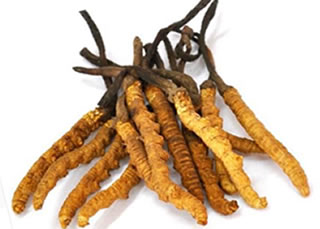
Wild Ophiocordyceps sinensis is a parasitic fungus found in high-altitude areas of the Tibetan Plateau and surrounding regions.
The fungus infects caterpillar larvae and eventually produces a fruiting structure from the insect host.
Because wild material is scarce and expensive, large-scale commercial supplementation usually relies on cultivated or fermented fungal products.
Are commercial Cordyceps supplements the same as wild caterpillar fungus?
Not necessarily.
Products may contain cultured mycelium, fermented preparations, related Cordyceps species, proprietary preparations, or wild material.
Results from one preparation should not automatically be generalized to another.
What is Cordyceps traditionally used for?
Traditional Chinese medicine has used the caterpillar fungus within traditional frameworks for fatigue, breathing complaints, sexual function, kidney-related conditions, and general vitality.
These traditional concepts should not be interpreted as modern biomedical proof.
What does research show?
Exercise performance
Evidence is mixed.
Some small placebo-controlled trials report improvements in selected exercise thresholds, while others find no meaningful performance advantage.
Kidney disease
Chinese trials and systematic reviews have evaluated proprietary Cordyceps preparations as adjuncts to conventional treatment for diabetic kidney disease and dialysis patients.
Some outcomes favor certain products, but study quality and certainty remain important limitations.
These findings concern adjunctive proprietary preparations, not replacing standard kidney care with an over-the-counter Cordyceps supplement.
Sleep and fatigue
Small trials of specific fermented products have reported possible improvements in sleep or fatigue.
One trial with one product is not enough to establish all Cordyceps supplements as treatment.
How is Cordyceps used?
Products include capsules, powders, cultured mycelium, fermented liquids, and proprietary extracts.
The label should identify the species and preparation.
Is there a standard dose?
No universal dose applies to every Cordyceps product.
Clinical studies use product-specific amounts and preparations.
What are the side effects and safety concerns?
Human trials usually report relatively few serious short-term adverse effects, but long-term supplement safety is less certain.
Product quality, species identity, and contamination also matter.
Does Cordyceps interact with medicines?
Well-characterized clinical interactions are limited.
Extra caution is reasonable with immunosuppressive medicines, diabetes medicines, anticoagulant or antiplatelet therapy, and multiple herbal products.
Who should avoid Cordyceps supplements?
Extra caution is appropriate for pregnant or breastfeeding people, children, organ-transplant recipients or others taking immunosuppressants, people with autoimmune disease, and people using multiple prescription medicines.
Frequently asked questions
Does Cordyceps improve energy?
Some small studies suggest possible exercise effects, but results are inconsistent.
Is Cordyceps good for kidney disease?
Certain standardized preparations have been studied as adjuncts to conventional therapy. Evidence quality remains an important limitation.
Does Cordyceps cure insomnia?
No.
Is wild Cordyceps the same as supplements?
Often not.
About this article
- Written by
- MedicalHealthGuide Editorial Team
- Updated