Nutrition guide
Celery: Nutrition, Blood Pressure Evidence and Safety
Also known asCelery, kintsay, Apio, Ch’in-nst’ai, Quichay, Fan qin cai Apium graveolens
On this pageWhat is celery?
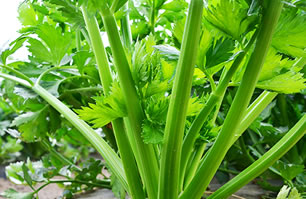
Celery, or Apium graveolens, is a vegetable in the carrot family. The stalks and leaves are eaten as food, while celery-seed extracts are sold as herbal supplements.
One small randomized trial found that a standardized celery-seed extract lowered blood pressure when added to patients’ existing hypertension treatment. This is promising but not enough evidence to use celery seed instead of established blood-pressure medicine.
What is celery?
Celery belongs to the Apiaceae family.
Different plant parts are used for different purposes: stalks and leaves as vegetables, seeds as seasoning, and concentrated seed extracts as supplements.
These forms should not be considered equivalent.
What nutrients does celery provide?
Celery is mostly water and is relatively low in calories.
It contributes fiber, potassium, folate, vitamin K, and other nutrients.
Its nutritional value does not prove medicinal effects from seed extracts.
What does research show?
Celery seed extract and blood pressure
A small randomized controlled crossover trial in people with hypertension found that a standardized celery-seed extract lowered blood pressure while participants continued usual treatment.
The trial was small and short. Independent replication is needed.
Blood sugar and cholesterol
Small studies have also reported favorable changes in several metabolic measurements.
These findings do not establish celery-seed extract as diabetes or cholesterol treatment.
Other medicinal claims
Celery has been promoted as a diuretic, anti-inflammatory, gout remedy, and “detox” food.
Reliable clinical evidence is not strong enough to support these broad claims.
How is celery used?
Celery stalks and leaves can be eaten raw or cooked.
Supplements may contain concentrated seed extract.
Is there a standard medicinal dose?
No universal evidence-based dose has been established.
Clinical study doses should not be transferred to homemade celery-seed preparations or unrelated products.
What are the side effects?
Celery is safe as food for most people.
Food allergy can occur and may occasionally be serious.
Long-term safety data for concentrated seed extracts are limited.
Does celery interact with medicines?
Because celery-seed extract may lower blood pressure, combining it with antihypertensive treatment could potentially intensify blood-pressure lowering.
Clinical interaction research remains limited.
Who should use celery supplements cautiously?
Extra caution is appropriate for people already taking blood-pressure medicine, pregnant or breastfeeding people considering concentrated seed extracts, people with celery allergy, and people taking several prescription medicines.
Frequently asked questions
Does celery lower blood pressure?
One small controlled trial of a standardized celery-seed extract found meaningful reductions, but evidence is not yet sufficient for routine hypertension treatment.
Is eating celery equivalent to the study extract?
No.
About this article
- Written by
- MedicalHealthGuide Editorial Team
- Updated